


Two more steps to the War by Gaël-Georges Moullec
/Two more steps to the War?
Gaël-Georges Moullec, Dr-HDR in Contemporary History
The last few days have been marked by two concurrent events, both equally dangerous for world peace.
The first is the expiration, on February 4 and 5, 2026, of the New Start treaty, regulating between the United States and Russia their respective strategic nuclear forces.
The second, more insidious, is the exchange between NATO Secretary General Mark Rutte and Russian Foreign Minister Sergey Lavrov over the possible presence of allied troops in Ukraine after the conflict ends.
A. New Start - disappearance of the last instrument guaranteeing minimum nuclear restraint between Moscow and Washington
The expiration of the New Start Treaty marks a major shift in the contemporary history of arms control. The 2010 agreement, concluded in Prague between Barack Obama and Dmitry Medvedev, was the last bilateral framework limiting the size and structure of Russia’s and the US’s strategic nuclear forces. The treaty set a ceiling of 1,550 deployed strategic warheads, as well as specific limits for deployed and non-deployed launchers. In addition, New Start had a mutual inspection regime designed to create transparency between the two Powers. The expiry of this treaty was legally unavoidable, as it had already been extended once in 2021, which its provisions did not allow for renewal.
Since 2022, inspections had been suspended, which had already significantly weakened the verification mechanism. In September 2025, Russia had proposed to the US an extension limited to the warhead ceilings alone, excluding the core elements of inspections and transparency obligations; Washington had not acted on them.
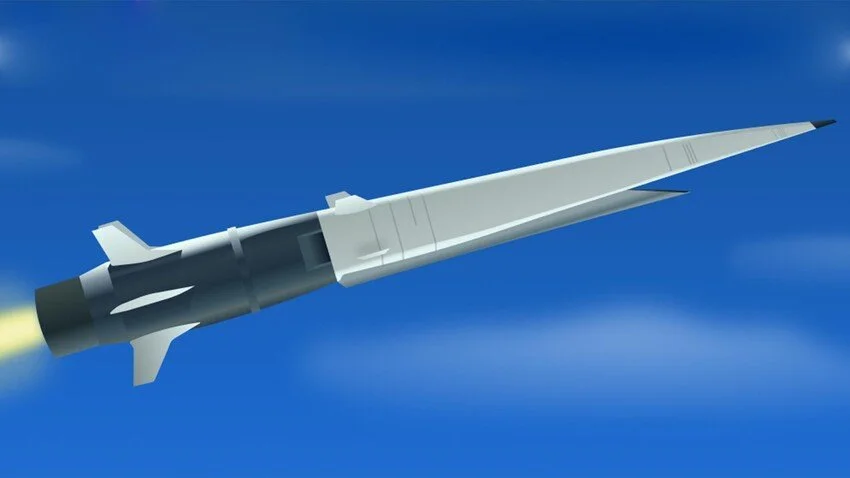
The demise of New Start puts an end to the entire bilateral architecture that had structured the US-Russian nuclear relationship since the end of the Cold War. This event follows the cancelation of major agreements such as INF[1] or ABM[2]. A period is now beginning when strategic arsenals are no longer governed by any binding mechanism. This does not necessarily translate into an immediate increase in nuclear stockpiles, as both countries already have ample capacity to ensure their mutual assured destruction. It does, however, point to an increasing risk of diversification and qualitative modernization of delivery vehicles, whether hypersonic weapons, maneuverable warheads or space systems, which may alter strategic balances.
Today, the main risk arises from the total disappearance of transparency. Without inspections, without notifications, without data exchanges, each of the two powers is once again condemned to interpret the opposing signals in a context of increased mistrust. This mechanically increases the danger of misunderstanding, mismanaged crisis or accidental escalation.
Ultimately, the expiration of New Start does not just mark the end of a legal framework; it symbolizes entry into a nuclear order marked by weakening control mechanisms, fragmentation of norms, and suspicion.
B. Presence of Allied troops in Ukraine – a point of no return?
In a speech delivered on 3 February 2026 in front of the Ukrainian Rada[3], the NATO Secretary General adopted a position in favor of the future presence of foreign troops in Ukraine, albeit within a strictly conditioned framework. He said some European Allies had announced that they would « deploy troops to Ukraine after an agreement », including ground, air and naval forces, as part of security guarantees to ensure post-conflict stability in the area and prevent any resurgence of Russian aggression.
The Russian position - as expressed by Sergei Lavrov in his interview on 5 February 2026 on RT[4], now banned in Europe - is in direct opposition to this. Sergei Lavrov explicitly states that any prospect of future security for Russia implies the total absence of European troops in Ukraine. He said that Moscow could consider an agreement if Kiev renounces the disputed territories and if « the security conditions that Russia demands, i.e. the absence of European troops in Ukraine » are guaranteed. For Russia, this is not a negotiable point: a neutral, non-aligned Ukraine, with no Western military presence, is the sine qua non for a lasting settlement.
C. A long-known Russian position: Vladimir Putin on the presence of allied troops in Ukraine
Over the years 2022 to 2025[5], Vladimir Putin has developed and refined a strategic line that is unambiguous: Ukraine, for Russia, can in no way become the location of foreign military forces and any prospect of deployment, even limited, of Western contingents on its territory, would constitute a direct threat to Russian national security, and would constitute a final step towards a direct confrontation with NATO countries, potentially catastrophic!
Thus, in the general architecture of strategic thinking set out in Speeches 2022–2025, the absolute exclusion of any foreign military presence in Ukraine appears as an intangible pillar.
Ultimately, reading the 2022–2025 Speeches indicates that the Russian position is neither conjunctural nor rhetorical. It is part of a coherent vision of the European order and national security, fed by historical, civilizational and strategic arguments that respond from one speech to another.
Such a presence, far from sealing peace, would condense all the reasons which, from the Russian point of view, justify the continuation of the confrontation which would open a direct confrontation between Russia and NATO.
--------------------
[1] INF (Intermediate Nuclear Forces, 1987) abolished all ground missiles of range 500 to 5,500 km between the United States and the USSR, completely eliminating this category of weaponry.
[2] ABM (Anti-Ballistic Missile Treaty, 1972) limited the missile defense systems of the United States and the USSR by prohibiting any national shield against ballistic missiles, in order to preserve nuclear stability by ensuring mutual vulnerability.
[3] Source : Address by NATO Secretary General Mark Rutte to Ukraine’s Verkhovna Rada, 03 February 2026, https://www.nato.int/en/news-and-events/events/transcripts/2026/02/03/address-by-nato-secretary-general-mark-rutte-to-ukraines-verkhovna-rada
[4] Source: Foreign Minister Sergey Lavrov’s interview with RT television channel, Moscow, February 5, 2026. https://mid.ru/en/foreign_policy/news/2077070/
[5] Vladimir Poutine, Discours 2022-2025. Edition traduite, présentée et annotée par Gaël-Georges Moullec, Paris, SPM, 2026, 957 pages. https://www.sdbrnews.com/sdbr-news-blog-fr/interview-de-gal-georges-moullec-spcialiste-de-lhistoire-russe