




Germany’s new military strategy: strategic scope and implications for Europe
/Germany’s new military strategy: strategic scope and implications for Europe
by Gaël-Georges Moullec*
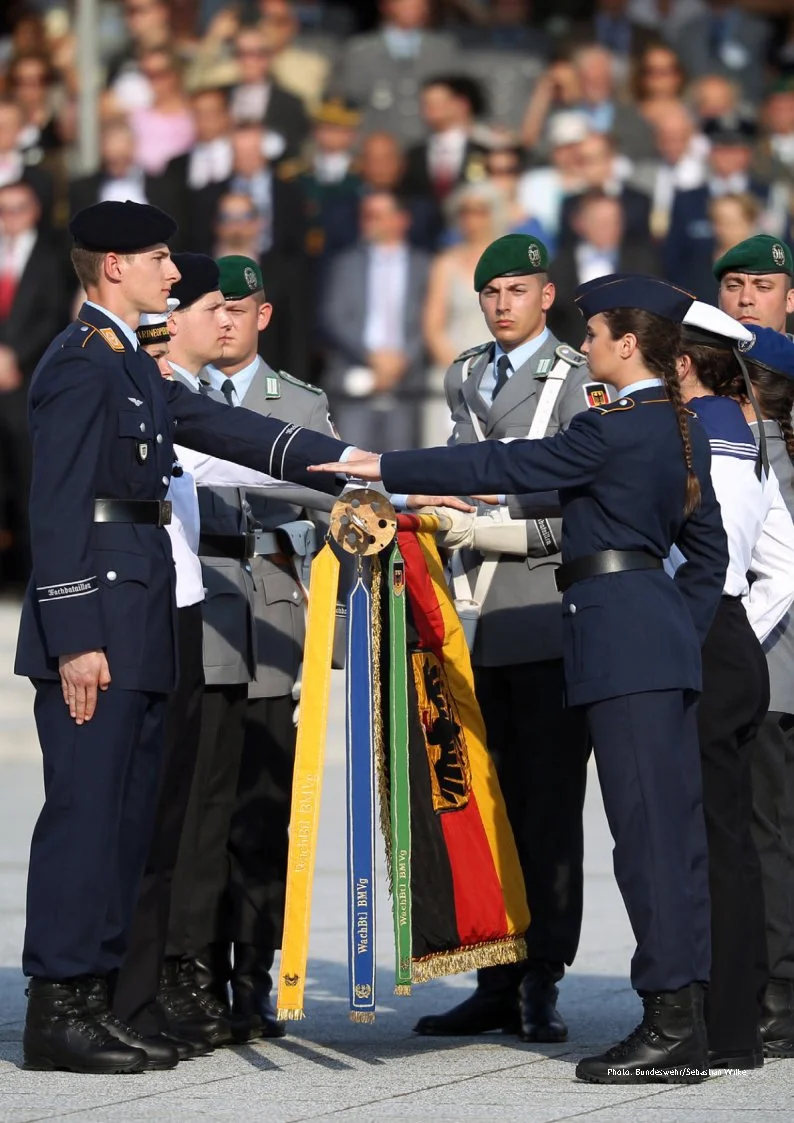
Germany’s publication of its Comprehensive Concept of Military Defence: Military Strategy and Plan for the Armed Forces. Responsibility towards Europe.[1] marks a major historical turning point. For the first time since the founding of the Federal Republic, Berlin has adopted a formalised military strategy, publicly acknowledged and linked to a coherent force plan. This document explicitly breaks with the culture of strategic restraint that has shaped the Bundeswehr for more than seven decades. It places Germany on a path of explicit preparation for high-intensity warfare in Europe, unambiguously identifying Russia as the primary and enduring threat to German, European and Euro-Atlantic security.
The German strategy is based on a now-established assessment of the strategic environment: Russia is described as a revisionist actor, already waging a comprehensive confrontation below the threshold of war through hybrid means, whilst preparing the conditions for an armed clash with NATO. This assessment underpins the entire document. The defence of the national territory and the Alliance becomes the Bundeswehr’s priority mission, relegating expeditionary operations to the background. The adoption of the so-called ‘One-Theatre’ approach reflects this integrated vision of the battlefield, linking territorial, cyber, information and space domains into a single strategic continuum.
The text’s central ambition – to make the Bundeswehr the most powerful conventional army in Europe – constitutes less a political proclamation than a structuring doctrinal choice. The document assumes that Germany, as Europe’s leading economy and a central power on the continent, must now bear a decisive share of the burden of conventional deterrence against Russia. This build-up is explicitly intended to offset the US strategic pivot towards the Indo-Pacific, whilst maintaining the transatlantic link. Contemporary analyses emphasise that this strategy reflects a deliberate Europeanisation of NATO’s European pillar rather than a weakening of the bond with the United States.
The implications for German-Russian relations are far-reaching. By describing Russia as a systemic and enduring threat for the foreseeable future, Berlin is effectively putting an end to any prospect of a strategic partnership. The relationship is now shaped by a logic of deterrence, societal resilience and preparation for war. This shift is in line with academic analyses noting an irreversible break with the legacy of Ostpolitik, in favour of a posture of controlled but deliberate military confrontation.
At the European level, this strategy is profoundly reshaping Franco-German relations. Germany’s alignment with a logic of territorial defence, industrial build-up and conventional leadership brings Berlin closer to the French strategic culture regarding the centrality of the state threat. However, it also creates a new balance of power: whereas Paris had hitherto maintained strategic primacy based on nuclear deterrence and autonomy of action, the emergence of a massed and structuring Bundeswehr necessitates a redefinition of bilateral leadership. Recent research on converging strategic narratives highlights that this development opens up prospects for both enhanced cooperation and tensions regarding the governance of European defence.
Ultimately, this document is not merely a national military strategy: it represents a founding act for the European security architecture. By assuming a central role in conventional deterrence vis-à-vis Russia, Germany is permanently altering the strategic balance of the continent and redefining the terms of Franco-German relations, which are now set to revolve around an unprecedented nuclear-conventional partnership at the heart of Europe.
* Gaël-Georges Moullec, PhD in Contemporary History, Research Fellow at CRESAT.
[1] Overall Concept for Military Defence: Responsibility for Europe. Military Strategy and Plan for the Armed Forces. https://www.bmvg.de/resource/blob/6093766/01b1718498c25db9010ea13724d7a37a/dl-gesamtkonzeption-der-militaerischen-download-deu-data.pdf.
English version: https://www.bmvg.de/resource/blob/6093998/678875025812878cfa657f9801f62ffc/dl-gesamtkonzeption-der-verteidigung-eng-data.pdf.
French version: https://www.bmvg.de/resource/blob/6094004/f4624931ec6b7ef83589883e5c07d8ba/dl-gesamtkonzept-fra-data.pdf
Photos credits : Bundeswehr